Hybrid Napier (Pennisetum typhoides x P. purpureu)
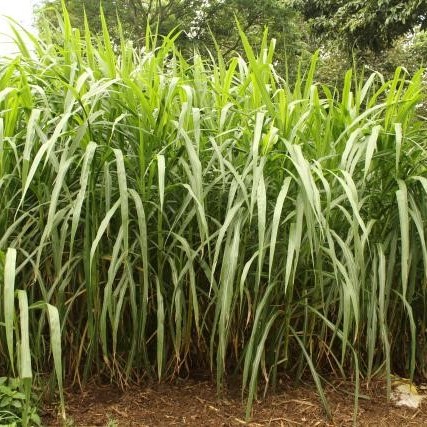
Napier grass (Pennisetum typhoides x P. purpureu) is also called as elephant grass due to its
tallness and vigorous vegetative growth. The plants tiller freely and a single clump may produce 50
tillers under favourable climatic and soil conditions. Unfortunately, the grass is coarse-textured, the
leaf blade and sheaths hairy, leaf margins sharply toothed and stems less juicy and fibrous. In 1953, a
cross was made in India with bajra which is more succulent, leafy, fine textured, palatable, fast growing
and drought resistant than Napier to combine these qualities with its high yielding potential.
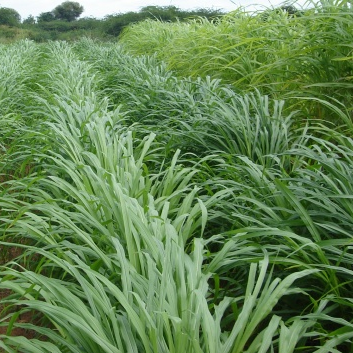
Compared to Napier grass, Hybrid Napier produces more tillers and numerous leaves. It grows faster and
produces more herbage but the stems are hard and the plants less persistent. Pusa Giant Napier has larger
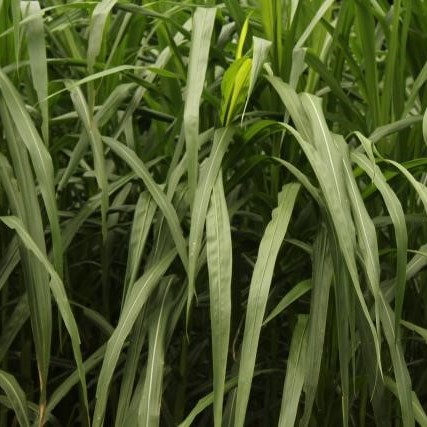
leaves, softer and less persistent hairs on leaf blades and sheaths and less sharp leaf edges. The stems
are also less fibrous than Napier. The tillers are more numerous and grow faster.